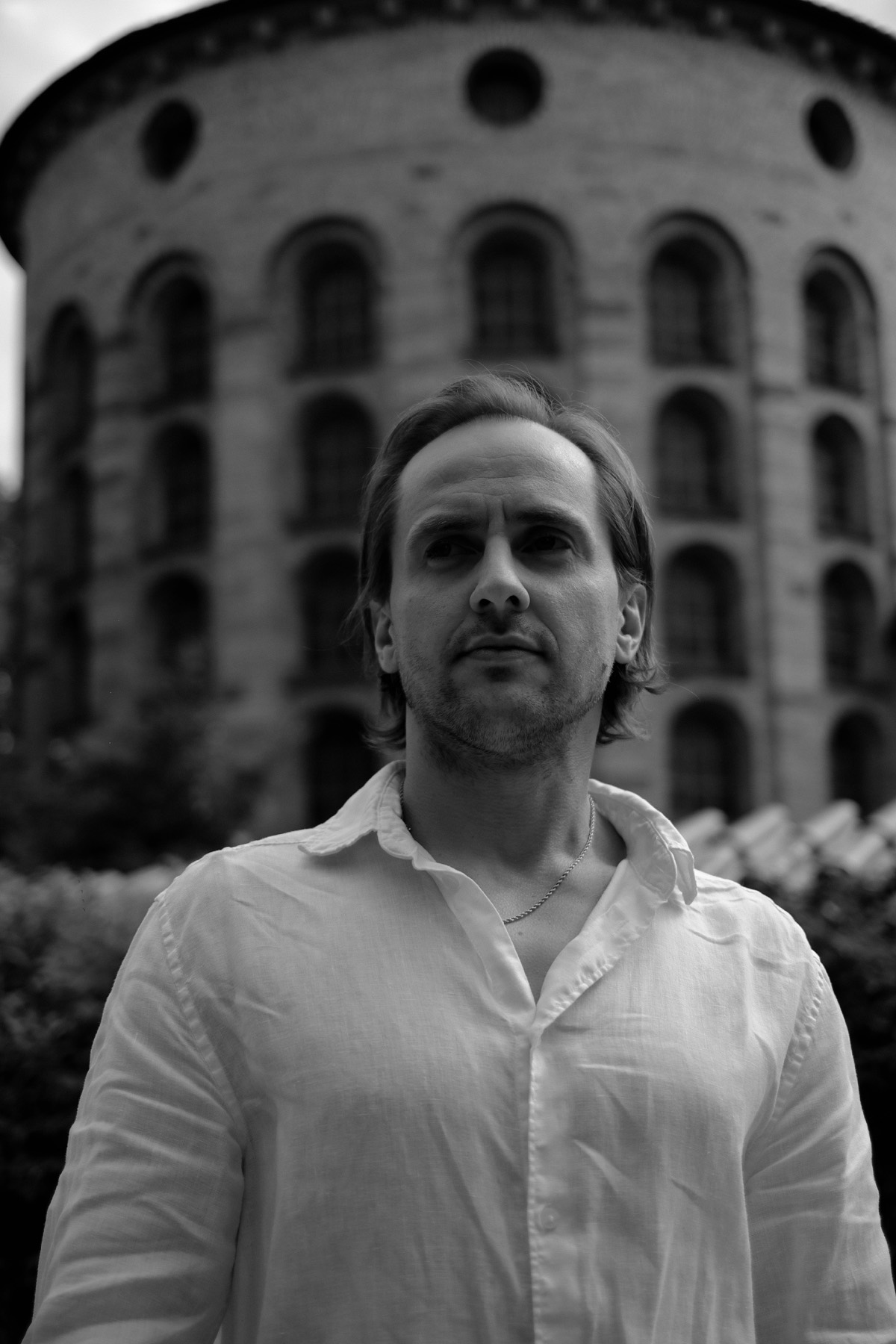
I could read every system but the one I was living in.
I'm writing this from the other side of it, so read the early years as wiring, not as a wound I'm still standing in. They explain how I was built. They stopped running the show a while ago, and what I did once I could finally see them is the actual story.
A machine doesn't lie to you. If something breaks, there's a reason: bad load, bad timing, a weak weld, a signal nobody read. Trace it back far enough and it always confesses. I spent over a decade getting very good at that, and most of my life refusing to point the same eye at myself.
Born braced
I was born into a family that looked stable from the outside, but it carried a long history of displacement. My bloodline spent generations as the foreigners wherever they were, too German in one country, too Russian in the next. That kind of thing doesn't stay in the history books. It settles into the nervous system and rides along in the posture. You don't inherit only genes. You inherit what your family learned to expect from the world.
When I was five, my father died. From the outside things looked normal afterward. What outsiders miss is simple: a life can look held on the surface while the system underneath is quietly learning to brace.
Trained to bury the edge
School was easy at first. I was sharp, fast, a little too much. Then it got boring, and boredom turned into acting out, detention slips, the class clown, and every so often the sharpness still broke through, top of the room in math out of nowhere, then buried again. Being sharp got punished, being funny got tolerated, so I leaned into funny.
The real split I can date. After ninth grade I had a poor report card for someone everyone called smart, and a teacher told me flat: you're sharp, but keep this up and you'll go nowhere. So I switched schools, my first real decision of my own, went quiet, listened, and came through near the top. It looked like growth, but it was mostly adaptation. The edge didn't disappear, it went underground, and learning to stay hidden ran deep.
Most people get the shadow backwards. Sometimes it isn't that you were wrong and need to soften. Sometimes you saw it clearly early and got trained out of it. The early signal got read as arrogant, disruptive, too much, so the child makes the brutal trade: if you want love, you dim the blade.
A buried blade doesn't disappear. It mutates into sarcasm, the need to provoke, the need to win. And it builds a very useful kind of man. Teach a sharp kid to censor his own edge and call it maturity, and you never have to restrain him. He restrains himself. He becomes competent, contained, useful, non-threatening. The perfect worker slave.
It took me past thirty to see it wasn't a character flaw. I was wired to initiate in a room full of people wired to respond, and for most of my life I filed that mismatch under something's wrong with me. It was a wiring difference nobody had named. Call it whatever you want, Human Design says Manifestor, but the mechanic is the same: an initiator raised among responders learns to brace against his own nature long before he can name it. When that finally clicked, a few months ago, it landed like the last piece of a puzzle.
I'm not telling this because the wound still leads. I'm telling it because this is where the pattern started.
I read every system but my own
I went into the technical world at sixteen and stayed for over a decade. Mechatronics first, then an engineering degree on top of it, and I worked my way off the easy bench into the rooms where the real work was, a plant running a car body line going in piece by piece.
It didn't stop at one trade. I kept moving, into project work, sales, IT, whatever the next room asked for. Each time the same pattern ran underneath: I'd learn the thing fast, start seeing what the people around me wouldn't say out loud, get restless, and move on. The same restlessness ran off the clock too. I took apart whatever broke that I thought I could fix, a car, a coffee machine, an old record player, never really about the thing, only about whether there was a system in it worth cracking.
It showed up at university the same way, in the master's especially. A brief would land and I couldn't just answer it, because I'd already seen the bigger shape around it, so I'd build that instead. The feedback came back the same every time: not what we asked for. It took me years to read that right. A system doesn't mind a wrong answer, because a wrong answer leaves the frame standing. What it struggles with is an answer from outside the frame.
Slowly something landed under all of it. I don't take in the world the way most people around me do, and they don't read me the way I read myself. For a long time I filed that under something's wrong with me. It isn't that I'm special, I'm just wired differently, and that meant learning almost everything my own way, because the path everyone's handed was laid out for people who move through the world differently than I do.
And I never stopped loving the machine. The complexity, the systems, the hunt for the layer under the layer, that part is still in me. What took me years to understand is that fascination without integration goes nowhere. The same diagnostic eye works on machines for free and on yourself for nothing, for years. I could trace a fault through a whole system without blinking and never once turn the same eye on the one I was living inside.
The body told the truth first
The first honest signal came underwater. Diving, twenty-five minutes in, my tank empty before everyone else's. It wasn't fitness. It was a nervous system that couldn't downshift, burning air to stay braced over nothing.
On paper the life worked, apprenticeship, degrees, titles, a master's in Munich on top. Underneath it was a low hum, a life that technically ran and didn't fit anymore. Then it stopped being quiet. Burnout, and the kind of collapse where effort stops paying out and the structure you spent a decade building can't hold the man standing on it. I'm not going to turn that into a scene. It happened, and what I did after is the part that matters.
The first real crack showed during my master's thesis, a sentence that wouldn't leave: something here isn't right. I stalled the thesis, then broke it off. Around then I picked up a book on the inner child, the kind of work I'd spent years making jokes about, and then things came apart, the work, the relationships, the things I'd been outrunning. The thing you mock first is often the thing you needed most.
The point isn't the damage, it's what formed around it, and what had to be rebuilt.
I didn't need a new identity. I needed to rebuild the man underneath
Before my thirty-third birthday I hit the bottom. I lost most of my old friends. That kind of low is a mirror, and most people can't hold it.
I did the thing you're supposed to do and went to therapy. At one point the therapist looked at my CV and said, almost impressed, that someone with trauma wouldn't have been able to do all that. That one sentence was the whole frame: if you can perform, you must be fine. Output as proof of health. Then came the labels. A label can point at a behaviour, but it can't rebuild a compass. I didn't need my symptoms sorted. I needed to come back into my own body.
Meditation came first, not for enlightenment, but because I couldn't sleep without it. Then it went further than I planned: breathwork, nervous system work, shadow work.
The bird fights its way out of the egg,
HERMANN HESSE
and whoever wants to be born has to destroy a world.
That line did more for me than any therapy session. You don't negotiate with the old world, you leave it.
Even the healing had its own industry. I went to a four-day silent retreat once, only vegetables, no talking, and somewhere in the silence I wanted to go deeper, and was told I had to qualify first, work my way up through the paid shorter ones. The moment a retreat turns into a sales funnel you can feel it. I came out calmer and a lot more certain of one thing: nobody was going to hand me the way back.
Real work changes your life on the outside, not just your vocabulary on the inside. My standards moved, my choices moved, my whole life slowly rearranged itself around what was actually true. Anything that hands you new language while leaving your life identical is a hobby and not what people call healing.
I stopped letting strangers name reality
For a couple of years I'd been buried in it, the nervous system, hormones, stress physiology, the whole machine. At some point it stopped being information and became a lens, and through it I could see something was off. With my background I should have had a different body under me. Instead, years of constant inner stress and the quiet load of everything we're exposed to had been pulling it out of me, the crown included. Hair was never the problem. Hair is the receipt. And the moment that landed, so did its opposite: if it ran one way, it could run back. I wasn't defective, my genes weren't a sentence, and once I dropped that belief, restoration stopped being an idea and became law.
Somewhere in there my trust collapsed, not as an opinion but as a body-level shift. Once you've watched yourself run on self-deception for years, the fake world outside stops being a surprise. As within, so without.
All of that came before an accident. A routine moment turned and my wrist was wrecked. My arm was locked three months in a cast, no training, no piano. It didn't change everything, the seeing had already happened, but it forced a full stop I couldn't outrun, and when the cast came off I quit half-measuring.
So I went hunting for the how, and found an economy built on one premise: keep you slightly broken so you keep paying. Different costumes, same religion. Blame one villain, buy certainty from a stranger, escalate the intensity, pay for a shortcut. White coat or truth hoodie, it's the same altar.
I spent a small fortune on supplements before I stood in front of the shelf and saw it clean: I hadn't become free, I'd swapped one shelf of pills for another. Same dependency, new branding.
Here's the line it comes down to. Outsource your body and your compass dies, and a man without a compass is easy to program. The black pill says the world is broken, so you're powerless. The white pill says the world is broken, so you become sovereign. Sovereignty isn't a mindset or a pose. It's refusing to rent your spine back from anyone, institution, guru, or influencer.
An alchemist doesn't blame the lead
One thread ran under all of this since I was sixteen: the body. Training, food, health, the one constant while everything else changed. I always had a pull toward being a little fitter than the day before, and that pull kept dragging me back to the body when everything else fell away. For most of those years I ran the modern playbook like a believer. I went through the costumes in order: gym-bro, academic, biohacker, four years vegan, then the supplements by the cabinetful.
That last one is where the holistic health gurus still live, convinced they escaped the pharma game. They didn't. They just moved the addiction to a prettier shelf, twenty "natural" capsules of pressed cellulose, blessed with the word natural and marked up for the halo. Same pill-popping, softer lighting.
And I wasn't a lazy man eating garbage. I was a disciplined man still losing his crown. Strong on paper, and the system underneath still wasn't safe. You can do everything the optimization world sells and still be quietly bleeding out, because discipline without integration is just a prettier cage.
The whole time, the story I'd been sold pointed at a villain: bad genes, DHT, the next deficiency, the next fear. Every version of it ends in surrender or dependency. An alchemist doesn't blame the lead. He transmutes it. I don't believe the body is defective; a system was never meant to be fixed from the outside in.
I didn't have a word for the state I ended up in. The name came later: biological sovereignty. The clarity that you don't need anything external to be whole, just clean inputs, real rhythm, an honest lifestyle, and a nervous system that finally feels safe. The fear-marketing stops landing on a system like that.
The method comes down to one line: reduce interference, increase coherence. But the noise isn't only in the plate, the training, the light, the water. It's in the nervous system, in the conditioning, in the soul. I lived cleaner than men who kept their crown while abusing their bodies, so it was never the genes. It was the noise I still carried inside, the old stress, the quiet poisoning that never showed on a lab report. Mens sana in corpore sano runs both ways: the body doesn't come right while the inner system is still at war. This is the part nobody sells you, because the whole system would collapse. That's why the real path isn't becoming. It's unbecoming, stripping out what drowns the signal, in the lifestyle and in the soul, until the body remembers itself. When you remember through your body who you are on a cellular level, what kind of magical creation you are, you will start to heal again.
That's what Crown Alchemy is. The alchemists searched for gold in matter; this restores the gold in the body. And it isn't mine to own. It's a philosophy I share through my story. The way I lived it doesn't transfer line for line, a different body and a different life run it differently, but anyone can reach it. The crown coming back is only the visible receipt that someone did.
Everything here grew from one break
Two summers ago the pieces finally sat down at one table: stress, sleep, food, light, rhythm, and what the body decides to show on the outside. The crown turned out to be one of the most honest receipts the body prints, not vanity but a readout. That's the seed Crown Alchemy grew from. But it didn't stop at one branch.
The making goes back further than any of it. As a kid I had a hand for art and design, and like the rest of the edge it got buried early. It came back in my thirties, with a camera, with instruments, with a pull toward clean structure. None of it was a career move. It was just what kept coming out of me when no one was watching.
The same eye that learned to read the crown reads naming and form, and that became Hermetica Studio. It also reads the distorted language around Manifestors from the inside, and that's where Life of a Manifestor comes from: my own take on being wired this way, and on whatever else touches a life built like mine. The world simply isn't built for people wired to initiate rather than respond, and most of what passes for spiritual guidance is quietly written for the other type. The same eye likes to build, too, and a pull toward clean structure for businesses online became Janordo. The house that holds all of it is Hermeticus House. None of it is a content niche. It's one line, branching: see clearly, remove the fake, restore order, build something real.
AI arrived somewhere in there, and for someone built the way I am it quietly widened what's possible. The breadth I'd carried for years, all the trades and crafts I picked up and put back down, finally had somewhere to land at once. For someone who was always too many things at once, that turns out to be enough.
The man who used to move for approval and the one writing this aren't the same person. The old version moved for validation from the outside; this one only moves when it's aligned from the inside. That, to me, is what spirituality actually is, not fake light, not therapy worn as a personality. I notice the difference most in what I no longer do. This isn't the summary of the work. It's the door into it. Everything else on this site is what came out the other side.